
Anubis
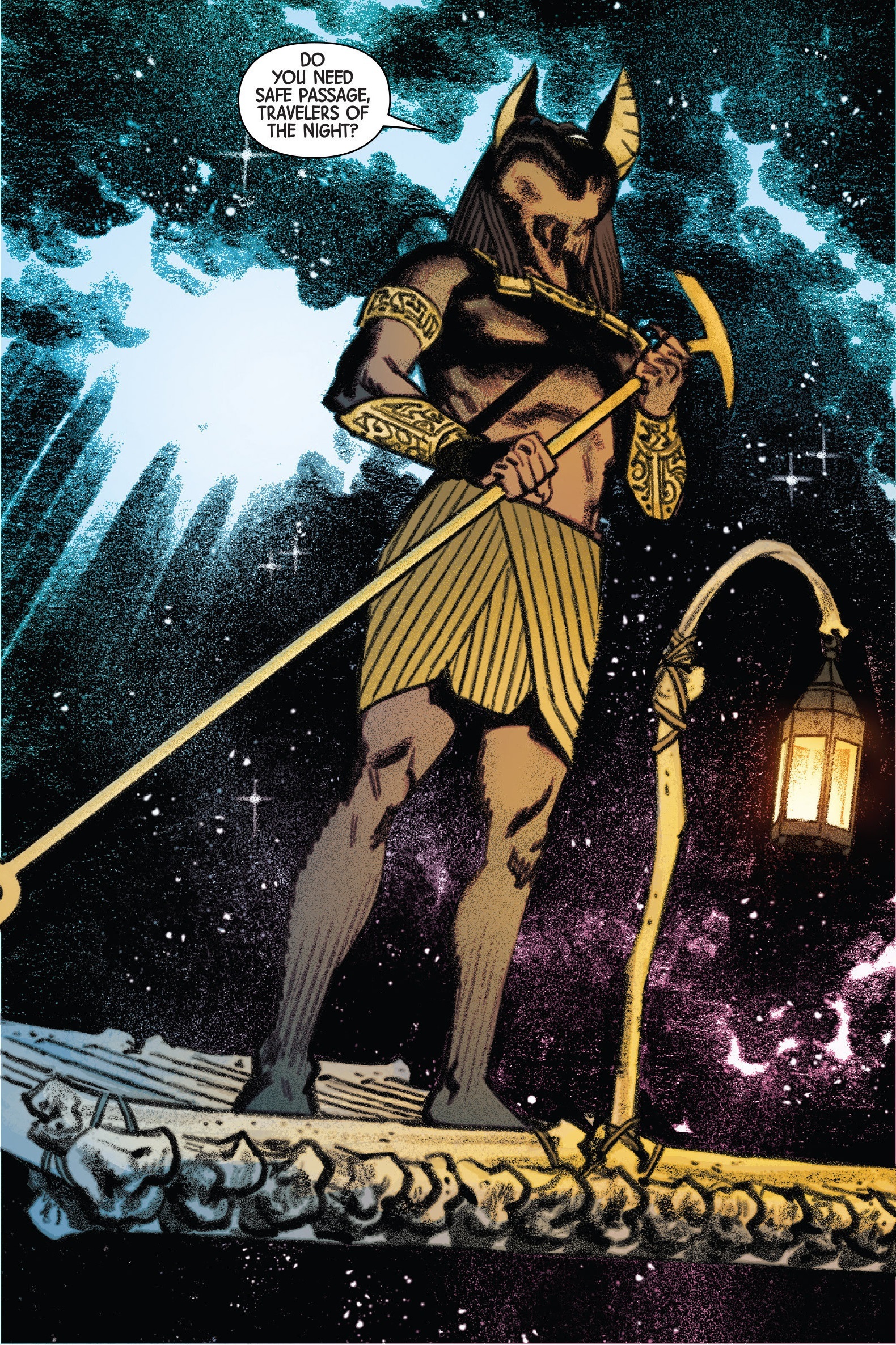
The Egyptian God who shepherds souls to the afterlife.
Name:
Anubis
Publisher:
Real name:
Anubis
Aliases:
- Anpu
- Anupu
- Inpu
- Wip
- Sekhem
- Lord of the Necropolis
- Lord of the West
- Lord of the Sacred Land
- Lord of Rosetau
- Lord of the caves
- Mr. Jackal
Birth date:
None
Gender:
Male
Powers:
- Animal Control
- Blast Power
- Chameleon
- Death Touch
- Divine Powers
- Feral
- Immortal
- Necromancy
- Phasing / Ghost
- Sense Death
- Siphon Lifeforce
- Soul Absorption
- Teleport
- Tracking
- Unarmed Combat
- Willpower-Based Constructs
First issue:
Adventures into the Unknown (1948) #15 The Monstrous Plant
Origin
Anubis was the Lord of the necropolis, the cities of the dead, who were consistently on the west shore of the Nile According to Egyptian beliefs, was in charge of guiding the spirits of the dead to the "other world", the Duat. Guarding the guardian of the balance in the Judgment of Osiris.
Iconography
Anubis was depicted as a canine-headed man, or as an Egyptian black dog (or jackal), the color of the putrefaction of bodies, and fertile land, a symbol of resurrection. Occasionally appears as a canid accompanying Isis. The association with the jackal is probably due to their habit of digging up the corpses from the graves to feed. Anubis was depicted with black fur, although the jackals in ancient Egypt had a reddish coat, because this color symbolized resurrection and fertility, the color of the silt brought by the Nile each year, renewing fertility fields.
Mythology
Anubis was the ancient god of the Duat. Anubis was associated not only with death, resurrection also after it, and was painted in black, the color representing fertility.
When Osiris came to power in the world of the dead, the Duat, Anubis took a secondary role, limited to embalm the bodies of the pharaohs, guide them to the cemetery and take care with his life. The priests wore masks of Anubis figure in ritual ceremony embalming of Pharaoh. Anubis was also responsible for monitoring, with Horus, the balance to be weighed in the hearts of the dead during the Judgment of Osiris.
The first religious texts not assigned parents, although in the Pyramid Texts is Qebehut daughter, the goddess who purified the deceased. In the Coffin Texts,Hesat or Bastet, was his mother. In other texts was the son of Ihet, also of Ra and Nephthys, Seth and Nephthys, Sekhmet, Isis and Osiris (in Memphis), or Sopedu.
Plutarch wrote that Anubis was the son of Osiris and Nephthys. Osiris, knocked up Nephthys, sister of Isis, instead of his wife. Because of Isis Nephthys disguised as other texts. Thus begat Nephthys Anubis.
Anubis is also considered the illegitimate son of Seth, Nephthys begotten. Seth decides to kill him after learning of his birth, but Nephthys deliver the child to Isis, the sister and wife of Osiris, who protects and breeding him. When Seth kills Osiris, Anubis helps Isis to resurrect the god . For this reason Anubis was in charge of embalming the Pharaohs, and guide them to the cemetery.
Epithets
He received the epithets and titles of "Lord of the Necropolis", "Lord of the West", "Lord of the Sacred Land", "Lord of the Sacred Country", "Lord of Rosetau", "He who is upon his mountain" , "Lord of the caves", "the God who presides over the shop", "the one in the embalming chamber", "Lord of the embalmers", "the one on the bands", "He who has the hearts "," The Lord of Nubia "


